


loading

Distal Radius Fracture Diagnosis & Treatment

Expert diagnosis and treatment of distal radius fractures by Dr. Mohamed Abas Elbishbishi. Learn about symptoms, causes, diagnosis, treatment options, surgery, recovery, and rehabilitation.

Distal Radius Fracture Diagnosis & Treatment

A distal radius fracture is one of the most common fractures affecting the wrist. It can occur after a simple fall or as a result of a high-impact injury, causing pain, swelling, reduced wrist movement, and difficulty using the hand.

Because the position and alignment of the wrist bones are important for normal hand function, proper diagnosis and treatment are essential.

At the clinic of Dr. Mohamed Abas Elbishbishi, each injury is carefully evaluated to determine the most appropriate treatment approach, with a focus on restoring wrist alignment, preserving movement, and helping patients return safely to their daily activities.

Understanding Distal Radius Fractures

The radius is one of the two bones of the forearm. The distal radius refers to the end of this bone closest to the wrist.

Because the position and alignment of the wrist bones are important for normal hand function, proper diagnosis and treatment are essential.

At the clinic of Dr. Mohamed Abas Elbishbishi, each injury is carefully evaluated to determine the most appropriate treatment approach, with a focus on restoring wrist alignment, preserving movement, and helping patients return safely to their daily activities.

Distal Radius Fracture Diagnosis amp Treatment Dr  Mohamed Abas Elbishbishi

Signs and Symptoms

A distal radius fracture may cause:

  • 1 1 e1788958529387
    Sudden wrist pain after an injury
  • 1 1 e1788958529387
    Swelling around the wrist
  • 1 1 e1788958529387
    Bruising or discoloration
  • 1 1 e1788958529387
    Difficulty moving the wrist or hand
  • 1 1 e1788958529387
    Pain when gripping or lifting objects
  • 1 1 e1788958529387
    Tenderness around the wrist
  • 1 1 e1788958529387
    Reduced grip strength
  • 1 1 e1788958529387
    Wrist deformity in displaced fractures
  • 1 1 e1788958529387
    Numbness or tingling in the hand in some cases

Even if the wound appears small, damage to deeper structures should never be ignored.

Common Causes & Risk Factors

Distal radius fractures commonly occur due to:

  • 1 1 e1788958529387
    Falls onto an outstretched hand
  • 1 1 e1788958529387
    Sports injuries
  • 1 1 e1788958529387
    Road traffic accidents
  • 1 1 e1788958529387
    Workplace accidents
  • 1 1 e1788958529387
    Direct trauma
  • 1 1 e1788958529387
    High-energy injuries
  • 1 1 e1788958529387
    Osteoporosis or reduced bone strength

The mechanism of injury can influence the fracture pattern and the treatment required.

Diagnosis

Accurate diagnosis is the first step toward successful treatment. During your consultation, Dr. Mohamed Abas Elbishbishi will assess:

  • 1 1 e1788958529387
    The location and severity of pain
  • 1 1 e1788958529387
    Swelling and tenderness
  • 1 1 e1788958529387
    Wrist alignment
  • 1 1 e1788958529387
    Range of motion
  • 1 1 e1788958529387
    Finger movement
  • 1 1 e1788958529387
    Grip function
  • 1 1 e1788958529387
    Blood circulation
  • 1 1 e1788958529387
    Nerve function
  • 1 1 e1788958529387
    Possible associated injuries
X-rays are typically used to identify the fracture and determine its alignment. In more complex cases, a CT scan may provide additional information about the fracture and whether the joint surface is involved.

TREATMENT OPTIONS

Treatment depends on the severity:

Non-Surgical Treatment

Not every distal radius fracture requires surgery. Stable fractures with acceptable alignment may be treated conservatively using:
  • 1 1 e1788958529387
    Wrist splinting
  • 1 1 e1788958529387
    Casting
  • 1 1 e1788958529387
    Temporary immobilization
  • 1 1 e1788958529387
    Pain management
  • 1 1 e1788958529387
    Activity modification
  • 1 1 e1788958529387
    Follow-up X-rays
  • 1 1 e1788958529387
    Rehabilitation after the fracture has healed
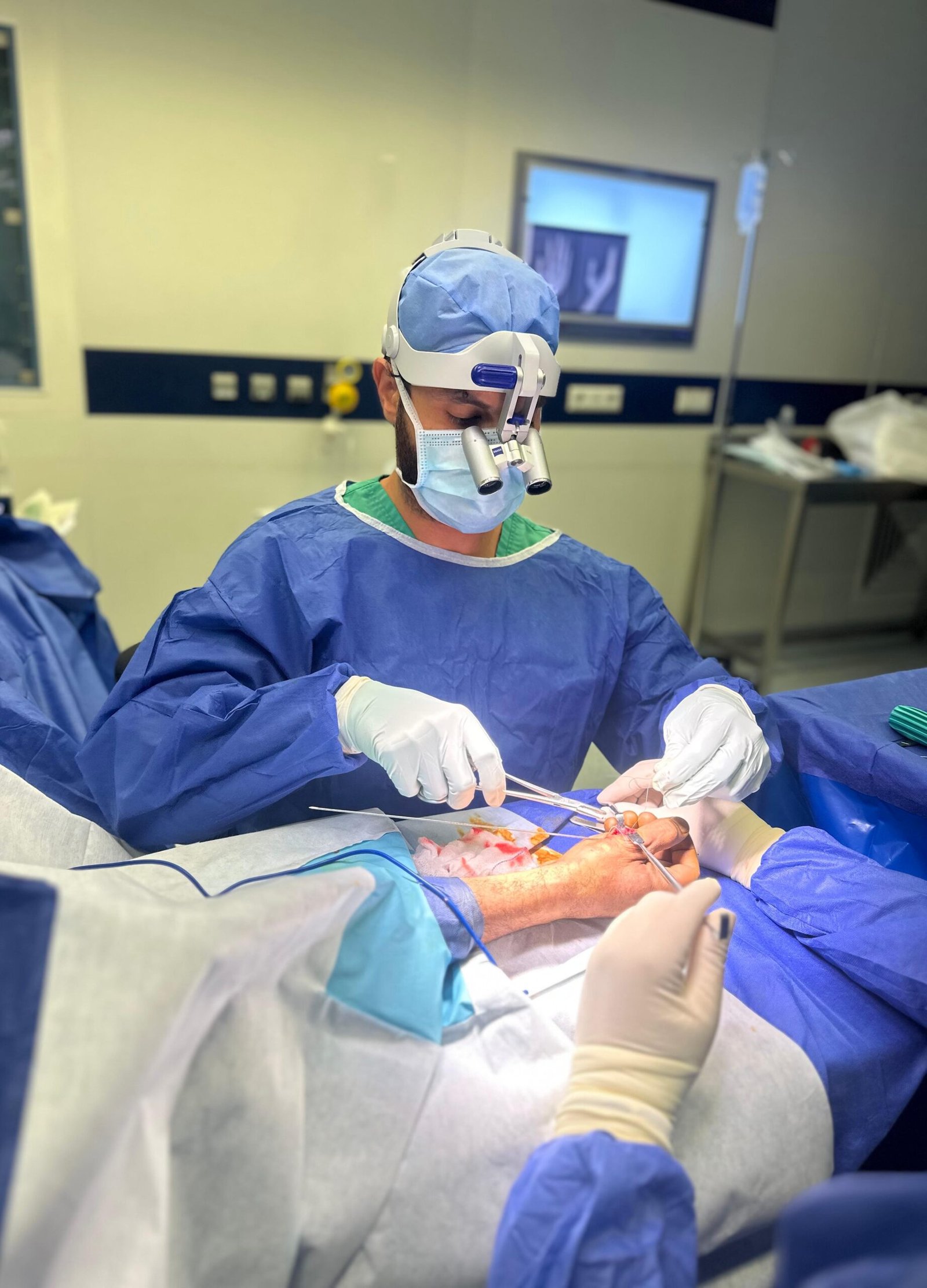
Regular follow-up is important because some fractures can shift position during the healing process.
Dr mohamed abas cut tendon scaled

Surgical Treatment

Surgery may be recommended when the fracture is significantly displaced, unstable, or involves the wrist joint in a way that makes maintaining proper alignment difficult.

Depending on the fracture pattern, surgical treatment may involve open reduction and internal fixation (ORIF) using specialized plates and screws to restore and maintain bone alignment.

The goal of surgery is not simply to repair the bone, but to restore the anatomy needed for good wrist movement, strength, and long-term hand function.

Recovery & Rehabilitation

Recovery from a distal radius fracture involves more than allowing the bone to heal.

Once it is safe to begin movement, rehabilitation may include:

  • Gradual wrist range-of-motion exercises
  • Finger and hand exercises
  • Progressive strengthening
  • Grip-strength training
  • Hand therapy when required
  • Functional rehabilitation
  • Gradual return to normal activities

The recovery period varies according to the fracture pattern, treatment method, age, general health, and individual healing response.

Related Treatments

1 1 e1788958529387

F.A.Qs

Can a distal radius fracture heal without surgery?

Yes. Stable fractures with acceptable alignment can often be treated successfully with a cast or splint and regular follow-up.

Does every distal radius fracture require surgery?

No. Surgery depends on factors such as displacement, stability, joint involvement, fracture pattern, and the patient's functional needs.

How long does recovery take?

Bone healing generally takes several weeks, but complete recovery of wrist strength and movement may take longer and often requires rehabilitation.

Will my wrist be stiff after a fracture?

Temporary stiffness is common following immobilization. Appropriate rehabilitation can help gradually restore wrist mobility and function.

Can I return to sports after a distal radius fracture?

Many patients can return to sports after adequate healing and rehabilitation. The timing depends on the fracture and individual recovery progress.

What happens if a distal radius fracture heals incorrectly?

Poor alignment can affect wrist movement, strength, and function and may contribute to persistent pain or other long-term problems. Appropriate assessment and follow-up help reduce these risks.

When Should You Visit DR. MOHAMED ABAS Clinic?

You should seek prompt medical evaluation if you have:

  • 1 1 e1788958529387
    Severe wrist pain following an injury
  • 1 1 e1788958529387
    Significant swelling
  • 1 1 e1788958529387
    A visibly deformed wrist
  • 1 1 e1788958529387
    Difficulty moving the wrist or fingers
  • 1 1 e1788958529387
    Persistent weakness
  • 1 1 e1788958529387
    Numbness or tingling
  • 1 1 e1788958529387
    Pain that prevents normal hand use
  • 1 1 e1788958529387
    An open wound near the suspected fracture

Early assessment can help determine the appropriate treatment before the fracture heals in an unfavorable position.

Book Your Consultation with Dr. Mohamed Abas Elbishbishi

Early diagnosis leads to better outcomes.
Book your consultation today with Dr. Mohamed Abbas El Beshbishi for expert orthopedic care.